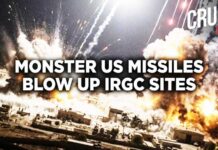
For 13 straight nights, U.S. warplanes have bombed Iran in the name of “protecting shipping,” while Americans at home are given little proof and even less say.
Story Snapshot
- U.S. Central Command (CENTCOM) confirms 13 consecutive nights of strikes on Iranian military targets, framed as self-defense for commercial shipping.
- Targets go far beyond boats and mines, hitting command centers, drone depots, air defenses, and coastal radar across Iran’s shoreline.
- The campaign is part of a wider war that has already killed civilians and U.S. troops, raising fears of a larger regional conflict.
- Most evidence for “necessity” is classified, leaving both conservatives and liberals reliant on press releases instead of hard facts.
CENTCOM’s Stated Mission: Protect Shipping, Hit Iran Night After Night
U.S. Central Command says the United States has carried out strikes on Iran for 13 nights in a row, all aimed at stopping attacks on civilian mariners and commercial shipping in the Strait of Hormuz. Military statements describe the latest wave as hitting Iranian command centers, drone storage facilities, communications networks, coastal surveillance sites, and maritime capabilities to reduce Iran’s ability to threaten ships. Earlier nights targeted missile and drone depots, air-defense assets, and coastal radar, with CENTCOM repeatedly calling the operations “self-defense” and “retaliatory” strikes.
Officials say President Trump ordered these missions to hold Iran accountable for past attacks on commercial vessels and to keep oil and goods moving through one of the world’s most important sea lanes. U.S. releases and regional reporting link several strike waves to specific incidents, such as attacks on tankers and cargo ships that left crew missing and ships disabled by fires. Washington also says Iran has targeted more than 30 commercial vessels over three months, painting the campaign as necessary to defend trade and U.S. forces in the Gulf region.
What Is Really Being Hit: From Boats and Mines to Broad Military Infrastructure
The official talking point is “protecting shipping,” but the actual target list is much wider than small boats and mines. CENTCOM fact sheets and partner reporting describe thousands of Iranian sites struck since the war began, including air-defense systems, coastal surveillance assets, missile and drone storage, naval facilities, and logistics hubs along Iran’s coastline. One recent wave hit about 90 targets in several eastern and southern cities, reaching far beyond the immediate Strait of Hormuz area. On the eleventh night alone, U.S. assets attacked operations centers, aircraft hangars, drone warehouses, and maritime capabilities in a 75‑minute burst of strikes.
These choices matter because they blur the line between narrow sea-lane defense and a broad effort to weaken Iran’s military across the board. Air defenses and command centers can be tied to protecting or directing attacks on ships, but they are also core parts of Iran’s national security system. For Americans already distrustful of the “deep state,” this looks familiar: a campaign sold as limited and defensive, yet carried out at large scale with complex weapons, including fighter jets, naval vessels, one-way attack aerial drones, and even one-way attack sea drones. People on the right and left have seen similar patterns before in Iraq, Afghanistan, Syria, and Libya.
A Wider War With Real Human Costs and Little Public Scrutiny
The 13-night campaign does not stand alone; it is part of a wider, undeclared war that is already reshaping the region. Reporting tied to CENTCOM statements says the Iran war began when U.S. and Israeli forces struck Iran in late February, prompting Iranian attacks on Israel and Gulf states that host American bases. Since then, thousands have been killed and millions displaced by strikes across Iran and neighboring countries. Iran’s health ministry reports dozens of civilian deaths and hundreds wounded from recent U.S. attacks, while U.S. troop deaths in the conflict have risen into the double digits.
At the same time, CENTCOM has used naval power to resume a blockade around Iran, redirecting commercial vessels and even disabling at least one ship to keep traffic from entering or leaving Iranian ports. President Trump has publicly warned Iran of “major military punishment” and has threatened to widen targets to include energy plants and bridges, sites international law experts say are vital for civilians and may be illegal to hit. These moves feed a shared concern among many Americans: decisions that can trigger war, kill civilians, and risk U.S. lives are being made far away, with limited debate and little transparency.
Fog of War and the Deep State Problem: Classified Evidence, Public Doubt
Across all these releases, one fact stands out: CENTCOM controls almost all of the initial information the public sees. The military gives reasons, lists target types, and claims success in weakening Iran’s ability to hit ships, but does not publish underlying intelligence, such as radar tracks, satellite images, ship logs, or full post-strike damage reports. That means voters, and even many members of Congress, must take the Pentagon’s word on whether each nightly strike was truly needed and proportional.
Eyewitness video shows an explosion in Bandar Abbas, Iran, after the US Central Command (CENTCOM) said it completed its 13th consecutive night of US strikes on Iran late Thursday. pic.twitter.com/nhsgaIl6EE
— Al Arabiya English (@AlArabiya_Eng) July 24, 2026
This lack of open evidence hits a nerve on both sides of the political aisle. Conservatives who remember failed nation-building and endless wars worry the “America First” promise is again being stretched by the national security establishment. Liberals who fear unchecked military power and growing inequality see another example of elites making life-and-death choices without real accountability. In both cases, people feel the government acts first and explains later, if at all, while ordinary Americans pay the price in higher energy costs, market uncertainty, and the risk of yet another long war they did not truly choose.
Sources:
pjmedia.com, centcom.mil, reuters.com, aljazeera.com, x.com, youtube.com, thehill.com, wncy.com, iranintl.com
© rightwingjournal.com 2026. All rights reserved.