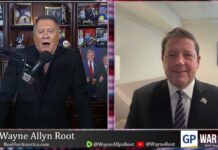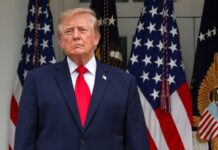
By wiping out the leaders of the nation’s election-help agency just before the midterms, President Trump has turned a little-known commission into the latest front line in the fight over who controls America’s voting system.
Story Snapshot
- President Trump has dismissed all remaining commissioners of the U.S. Election Assistance Commission, a small but important federal agency that supports how states run elections.
- The move comes on the heels of a Supreme Court ruling that gives presidents broad power to fire independent agency leaders without cause, overturning 90 years of limits.
- Supporters say Trump is using that new power to fix a dysfunctional election system and stop “legalized cheating.” Critics call it a dangerous power grab that threatens fair elections.
- The clash highlights a deeper fear shared by many Americans: federal leaders are fighting for control, not for voters, while trust in the entire election system keeps falling.
What The Election Assistance Commission Does — And Why It Matters
The U.S. Election Assistance Commission is a small, independent, bipartisan federal agency created after the messy 2000 election to help states run better and more secure elections. Congress set it up under the Help America Vote Act to offer guidance, test voting machines, and share best practices, not to police voters or states. Most people have never heard of it, but state and local election officials rely on its standards and technical advice when they buy voting systems or design ballots.
Legal experts note that Congress intentionally kept the commission at arm’s length from the White House, describing it as “independent” and giving it no direct enforcement power over states. That design was supposed to keep basic election nuts and bolts—like machine testing and ballot design—away from day-to-day partisan fights in Washington. When a president moves to control or reshape this kind of agency, it raises alarms among people who fear one party could tilt the rules of the game in its favor.
Trump’s Firings And His New Removal Power
Reports from election law observers say President Trump has now fired all remaining commissioners at the Election Assistance Commission, including the Democratic members, leaving the agency without its governing board right before national midterm elections. This fits a broader pattern in his second term: Trump has removed or tried to remove at least 20 members of independent boards and commissions since 2025, often citing policy disagreements instead of misconduct.
This time, Trump’s team points to a fresh Supreme Court ruling, Trump v. Slaughter, which struck down old limits on firing leaders of the Federal Trade Commission and similar agencies. In that 6–3 decision, the Court overturned the 1935 case Humphrey’s Executor and said the president can now remove commissioners of so-called independent agencies at will, including for policy disagreements. That decision has been described by analysts as giving presidents “sweeping new authority” over roughly two dozen multi-member agencies that Congress once tried to shield from politics.
Supporters Say Trump Is Cleaning Up A Broken Election System
Trump allies and many conservative commentators argue these firings are a necessary use of lawful power to fix a system they see as corrupt and biased. They claim independent agencies have become part of a “deep state” that blocks needed reforms, protects insiders, and shrugs off serious problems with voter rolls and voting equipment. For these supporters, the Supreme Court’s ruling simply restored what Article II of the Constitution always meant: the president must be able to control and, if needed, fire top officials in the executive branch.
Some backers point to Trump’s March 25 election integrity executive order, which directs federal agencies to push proof-of-citizenship rules and stricter standards for voting systems. They say the Election Assistance Commission has been too slow or unwilling to support tougher safeguards, and that its leaders resisted efforts to tighten security around registration forms and machine standards. By firing commissioners who, in their view, refuse to confront “legalized cheating,” supporters believe Trump is finally forcing the bureaucracy to answer to voters instead of Washington insiders.
Critics Warn Of A Power Grab That Endangers Fair Elections
Democratic leaders and many legal experts see the same actions as a dangerous assault on checks and balances and on free and fair elections. The Brennan Center for Justice argues Trump’s election executive order and related steps try to give the president “extraordinary unilateral authority to regulate federal elections,” even though the Constitution gives that power to Congress and the states. Their analysis calls the campaign to rewrite election rules from the White House “in many respects, illegal” and a grave threat to the future of U.S. election infrastructure.
#BreakingAlert
U.S. President Donald Trump has dismissed the remaining members of the bipartisan Election Assistance Commission (EAC), including two Democratic commissioners who were terminated by the White House and one Republican commissioner who resigned. pic.twitter.com/1N0BurowmF— BB News International Washington DC (@bbnwashingtondc) July 10, 2026
Senator Alex Padilla and Representative Joe Morelle, both ranking Democrats on key election and rules committees, have issued formal letters warning that Trump’s order and moves against independent agencies like the Election Assistance Commission amount to an attempted power grab. They say dismantling or capturing agencies that oversee voting standards and campaign finance rules could let one party skew the system without passing laws through Congress. Advocacy groups such as the Campaign Legal Center echo this view, stressing that independent agencies were designed to operate outside direct presidential control to guard the fairness of elections.
A Bigger Fight Over Who Runs The Government — And Whether Voters Still Matter
This showdown over a small commission reflects a much larger battle over who really runs the federal government and whether ordinary voters can still trust it. On one side, Trump and his supporters believe unelected boards and commissions use “independence” as a shield while they push globalist ideas, ignore border security, and fail to protect working Americans from fraud and abuse. On the other side, many liberals and institutional watchdogs fear that dismantling independent checks will let presidents bully agencies, attack opponents, and twist election rules to stay in power.
For many Americans of both parties, the common feeling is that federal leaders are focused more on protecting their own power than on protecting their rights. When a president can fire the leaders of an election-help agency at will, and Congress seems unable to fix deeper problems like inflation, high energy costs, or the growing wealth gap, people on the left and right see more proof that the system serves elites first. Whether these firings lead to cleaner elections or deeper distrust, they push the country further into a test of its basic promise: that hard work and honest votes, not insider deals, should decide our future.
Sources:
thegatewaypundit.com, seyfarth.com, campaignlegal.org, youtube.com, responsivegov.org, padilla.senate.gov, supremecourt.gov, eac.gov, facebook.com, littler.com, democracyforward.org, content.govdelivery.com, brennancenter.org, congress.gov
© rightwingjournal.com 2026. All rights reserved.