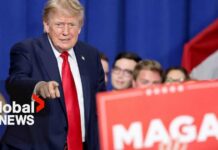
A federal judge just forced President Trump’s Justice Department to back off subpoenas for New York Times reporters after blasting prosecutors for basic legal mistakes aimed at journalists and even their families.
Story Snapshot
- A New York judge signaled he would throw out Trump DOJ subpoenas for New York Times reporters, prompting the government to withdraw them.
- The subpoenas targeted leak sources for reporting on security concerns with President Trump’s Qatari‑donated Air Force One jet.
- The judge questioned errors, omissions, and why the Justice Department went after journalists and relatives’ phone records so aggressively.
- CNN’s Elie Honig said the judge “excoriated” Trump’s Justice Department for “screwing up some of the basics,” raising fresh doubts about how power is used in Washington.
Judge’s Rebuke Turns DOJ Power Play Into an Embarrassment
A federal judge in New York put a sudden stop to the Justice Department’s push to force three New York Times reporters to testify about their confidential sources and hand over phone records tied to reporting on President Trump’s new Air Force One plane, which was donated by the government of Qatar. During a tense hearing, Judge Arun Subramanian signaled he was ready to quash the subpoenas if the government did not back down, pushing prosecutors into a quick retreat.
Prosecutor Sean Buckley told the court that “the government is prepared to unilaterally withdraw the subpoenas at this time,” ending this round of the fight but not the broader leak investigation. The about-face came after the judge pressed the Trump Justice Department on how it got approval for the subpoenas, why key facts were omitted or stated incorrectly, and whether officials followed their own rules for targeting the press. The case shifted from a quiet leak probe to a public test of government credibility.
How the Subpoenas Went After Reporters and Their Families
The clash began after the New York Times ran stories raising security concerns about President Trump flying on a Qatari‑donated Air Force One, including questions about foreign leverage and safety. In response, the Trump Justice Department issued grand jury subpoenas seeking to force several reporters to reveal confidential sources, a step the paper called a “brazen act.” The government then went further by seeking phone and text records from third‑party providers tied not only to the journalists but also to some of their relatives.
According to one summary of an unsealed court filing, the department sought records connected to a reporter’s mother and the spouses of two other reporters, reaching back months before the article ran. That kind of sweep raised alarms because Justice Department policy says subpoenas aimed at journalists should be a last resort and narrowly tailored, not the first tool pulled from the toolbox. Press‑freedom advocates warned that such tactics threaten to scare off whistleblowers and chill reporting on powerful officials, no matter which party controls Washington.
‘Screwed Up Some of the Basics’: What Elie Honig Saw
CNN senior legal analyst and former federal prosecutor Elie Honig said the judge “excoriated” the Trump Justice Department because they “screwed up some of the basics” in this case. Honig explained that Judge Subramanian faulted prosecutors for using subpoenas on journalists as a first resort instead of a last resort, as department policy requires. The judge also highlighted that the subpoenas swept in information about reporters’ family members, something Honig described as a glaring sign of overreach and sloppiness.
Donald Trump’s justice department has abandoned, for now, efforts to subpoena New York Times reporters over their coverage of security risks involving the president’s Qatari-gifted Air Force One replacement. #Trump #AirForceOne #NYT #DOJ \ The Guardian \ https://t.co/LpJjuv99uq
— eric (@kinolina) July 24, 2026
Honig added that by the end of the roughly hour‑long hearing, the judge gave prosecutors a stark choice: either withdraw the subpoenas or watch him formally quash them. Faced with that outcome, Justice Department lawyers backed off. Honig also reported that when asked, the lead prosecutor confirmed acting Attorney General Todd Blanche had personally approved the subpoenas, meaning the missteps went “all the way to the top.” For many Americans, that detail reinforces a sense that leaders in both parties sign off on aggressive tactics and dodge accountability when they blow up.
What This Fight Reveals About Power, Press, and a Failing System
This showdown is not just about one set of subpoenas or one president; it fits a years‑long pattern of both Republican and Democratic administrations pushing the edge when using legal tools against critics, leakers, and even political rivals. When the Justice Department goes after journalists, the legal fight often centers on how broad the subpoenas are, whether the press was given notice, and if the government truly needs the information or is mainly trying to send a message.
Here, the Trump Justice Department says it is trying to protect sensitive information tied to the president’s plane, which is a real national security concern. But the messy approval process, the sweep into relatives’ records, and the judge’s sharp criticism all feed a bipartisan worry that those in power treat the law as a weapon first and a guardrail second. Many conservatives see another example of a politicized “deep state” that cannot even follow its own rules, while many liberals see an administration using law‑enforcement powers to pressure critics in the press.
Shared Concerns in an Era of Retaliatory Politics
This case lands in a broader climate where trust in federal institutions is near historic lows, with citizens on both left and right convinced that elites in Washington play by a different set of rules. Previous Trump‑era efforts aimed at perceived enemies—such as failed prosecutions involving former Federal Bureau of Investigation director James Comey and New York Attorney General Letitia James—have already drawn harsh rulings from judges who questioned the legal basis and political motives behind them.
For readers who feel the government is failing ordinary people, the latest subpoena debacle may look like more proof. Prosecutors handling sensitive powers appear unable or unwilling to meet basic standards, and top officials sign off anyway. Yet because grand jury records are secret, the public may never see the full story, and both sides can spin the gap. That information blackout, too, is part of why so many Americans now doubt whether any branch of the federal government is truly working for them.
Sources:
nytimes.com, nydailynews.com, cnbc.com, usatoday.com, particle.news, binance.com, youtube.com
© rightwingjournal.com 2026. All rights reserved.