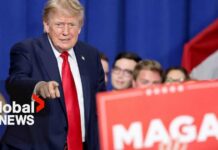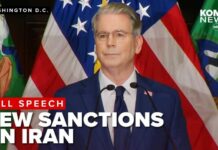
President Trump declared that a memorandum of understanding with Iran would “immediately” reopen the Strait of Hormuz — but reporters on the ground say nothing has been formally signed, Iran hasn’t given final approval, and the two sides can’t even agree on who would control the waterway.
Story Snapshot
- Trump announced a deal with Iran is “largely negotiated” and would reopen the Strait of Hormuz upon signing a memorandum of understanding.
- The proposed one-page framework calls for a phased 30-day process — not an immediate reopening — with core nuclear and sanctions issues deferred to later talks.
- Iran’s foreign ministry said no conclusion had been reached, and Iranian state media claimed the strait would remain under Iranian control, directly contradicting the U.S. account.
- Active military operations continued during negotiations, including a U.S. strike on an Iranian-flagged tanker, casting doubt on claims of a stabilized ceasefire.
What Trump Said and What the Draft Actually Proposes
President Trump announced on social media that a deal with Iran had been “largely negotiated” and that the Strait of Hormuz would reopen once a memorandum of understanding was signed. The Strait of Hormuz is the narrow waterway through which roughly 20 percent of the world’s oil supply passes, making it one of the most strategically critical shipping lanes on the planet. Trump’s framing implied swift resolution, but the underlying framework tells a more complicated story.
The one-page memorandum of understanding reportedly on the table would have Iran ease its grip on the strait while the U.S. gradually lifted its naval blockade — over a 30-day period, not immediately. Reports describe a three-phase structure: formally ending the war, addressing the strait, and then entering a 30-day window to negotiate a broader agreement covering sanctions and nuclear issues. That phased design directly conflicts with Trump’s “immediate” characterization, raising questions about whether the president’s public statements simplified — or overstated — the draft’s actual terms.
Iran Disputes the U.S. Version of the Deal
Iran’s Foreign Ministry spokesperson said publicly that Iran “has not yet reached a conclusion, and no response has been given to the U.S. side,” confirming the deal remained unsigned and unresolved. More significantly, Iranian state media reported a version of the draft memorandum that would place monitoring and control of the Strait of Hormuz under Iranian authority — a claim that directly contradicts the U.S. narrative of an open, freely navigable waterway. These competing accounts suggest the two sides may not agree on the most fundamental term of the agreement.
Iran had already created a government agency to vet and tax vessels seeking passage through the strait, a move that underscores Tehran’s intent to assert sovereign-like authority over the waterway. The U.S. Navy was quietly guiding approximately 70 commercial ships through the strait despite threats from mines, drones, and missiles — a workaround that highlights how far the situation remained from genuine normalization. Pakistan served as a key mediator in the talks, with Oman also playing a role in monitoring strait-related discussions.
The Gap Between Announcement and Agreement
This episode fits a well-established pattern in high-stakes diplomacy: announcements of “near-final” deals routinely outpace the documentary record. Multiple reports confirmed that draft versions were still being exchanged, that Trump himself was reportedly making edits to the memorandum, and that a U.S. official still needed presidential sign-off before any agreement could be finalized. Anonymous sourcing dominated the coverage, giving each side room to leak favorable interpretations before any signed text existed.
Trump: Once the memorandum of understanding is signed, the Strait of Hormuz will reopen quickly.
We've removed most of the underwater mines and believe the waterway will be safe to reopen soon. pic.twitter.com/FJsmelNbIW
— Bitinning (@bitinning) June 4, 2026
Compounding the uncertainty, U.S. Central Command fired on and disabled an Iranian-flagged tanker during the same period negotiations were underway, and Trump acknowledged that combat operations were not over. Republican senators were also reported to be pressuring the administration over proposed concessions, including the unfreezing of Iranian assets. The reported deal also required Iran to commit to never acquiring nuclear weapons and to dismantle its maritime mine networks — demands that, if unresolved, leave the strait’s reopening conditional rather than guaranteed. For Americans watching energy prices and global stability, the distance between a presidential announcement and a binding, enforced agreement has rarely been more consequential to understand.
Sources:
[1] Web – (VIDEO) Trump Responds to Iran’s Attacks on Kuwait, Says Peace …
[2] Web – Trump announces memorandum could reopen Strait of Hormuz, Iran …
[3] Web – US Iran deal memo talks gain momentum after Trump pauses Strait …
[4] Web – Where the 1-page memo to end war stands – ABC30 Fresno
[5] YouTube – Here’s what the Trump administration is saying about the Strait of …
[6] YouTube – U.S. and Iranian official near deal on Strait of Hormuz
[7] Web – National Security Presidential Memorandum/NSPM-2
[8] YouTube – President Trump reportedly makes edits to Iran peace deal memo
[9] Web – Presidential Memoranda – The White House
[10] YouTube – Reports Claim US, Iran Forge Memorandum for 60-day Ceasefire
[11] Web – Trump Details Ultimatum for Reopening Strait of Hormuz in Iran Deal
© rightwingjournal.com 2026. All rights reserved.