When a protest at a Texas immigration jail turned into the first-ever “antifa terrorism” case, families say the government rewrote the facts to make an example out of their kids.
Story Snapshot
- Federal jurors convicted nine alleged “North Texas antifa cell” members of terrorism-related crimes after a July 4, 2025 protest at the Prairieland immigration detention center.
- Only one defendant was found guilty of attempted murder for shooting an officer, but all were hit with decades-long sentences anyway.[1][5]
- Families and defense lawyers argue the government stretched terrorism laws to punish left-wing protest, using fireworks, clothing, and social media as “material support.”[5]
- The case sets a precedent in a country already split over protest, political violence, and a federal system many see as serving elites instead of ordinary people.[2][8][16]
What Happened at the Prairieland Detention Center
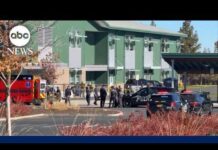
On July 4, 2025, activists gathered outside the Prairieland immigration detention center in Alvarado, Texas, for what supporters called a “noise demonstration” to protest immigration detention.[21] During the event, gunfire broke out and an Alvarado police officer was shot in the neck and badly wounded.[1] Federal prosecutors later said members of a “North Texas antifa cell” turned the protest into an ambush-style attack with weapons and fireworks used as explosives.[1][5] That framing set the stage for terrorism charges.
In March 2026, after a multi-week trial in federal court in Fort Worth, a jury convicted nine defendants on a set of serious charges.[1][5] The Department of Justice said they were guilty of riot with intent to commit violence, providing material support to terrorists, using explosives during a riot, and obstruction-related offenses.[1] Only the alleged ringleader, former Marine reservist Benjamin Hanil Song, was convicted of attempted murder and discharging a firearm for shooting the officer.[1][11] The mixed verdict is important to how both sides now tell the story.
Convictions and Sentences: One Shooter, Many Decades
Justice Department records show eight of the nine core defendants were convicted of riot and explosives charges based on conduct like throwing fireworks, vandalizing property, and damaging cameras.[1][5] They were all also convicted of providing “material support to terrorists,” a broad law that can include communications, weapons, transportation, and even people themselves.[1] Song alone was found guilty of attempted murder and firing the gun, yet the terrorism label applied to the whole group.[1][5] Families say this blurred individual blame.
Sentencing in June 2026 turned the case from unusual to extreme. Song received 100 years in federal prison.[11] Others, including Cameron Arnold (also known as Autumn Hill), Zachary Evetts, Savanna Batten, Bradford or Meagan Morris, Maricela Rueda, and Elizabeth Soto, got between 50 and 70 years.[6][14] Another defendant, Rolando or Daniel Sanchez‑Estrada, who was not at the protest and was convicted of hiding “anti‑government propaganda,” received 30 years.[5][6] In total, eight people were given about 450 years, far above typical protest-related cases.[6][14][15]
Why Families Say the Government Went Too Far
Defense lawyers argued in court that the Prairieland event was meant as a peaceful protest to support immigration detainees, not a terror attack.[6] They said prosecutors stretched the law by calling fireworks “explosives” and treating black clothing, private messaging apps, and left‑wing zines as proof of terrorism.[3][5] Media reports note that the explosives counts were based on consumer fireworks, not military bombs, backing claims that the “explosive” language may have oversold the danger.[5] Families see this as criminalizing activism.
Coverage from outlets like The Guardian and the Boston Globe describes the case as the first time the government successfully argued in court that people were part of an antifa terrorist group.[5][7] This made Prairieland a test case for a Trump‑era push to treat antifa as domestic terrorists.[3][8] Critics say that when the government wants to send a message, it chooses a symbolic case and throws the book at defendants to scare others.[5] Families of the jailed protesters now point to the unprecedented terrorism framing and severe sentences as proof politics shaped the outcome.
What the Government and Its Supporters Argue
The Justice Department says the case is simple: a group planned a dangerous riot, used weapons and explosives, and one member tried to kill an officer.[1] In their press releases, officials stress that the group formed a “North Texas Antifa Cell” and provided material support to terrorists by using communications tools, weapons, transportation, and even training.[1][3] They argue the heavy sentences are needed to protect law enforcement and deter future attacks on detention centers and other government sites.[1][2]
Supporters of the prosecution point out that domestic terrorism linked to protests has been rising since 2020.[16] Research from the Center for Strategic and International Studies found that more than half of domestic terrorist incidents in 2021 happened during demonstrations, and that government and police targets are now common.[16] In that wider picture, Prairieland is presented as one more example of protest turning into violent extremism. This view tends to see the case as a victory for public safety, not a threat to civil liberties.
Why This Case Feeds Anger on Both Left and Right
For many Americans, the details of the case matter less than what it represents. Conservatives look at a wounded officer and see proof that hard‑line measures are needed against extremist groups and anyone who attacks police or federal facilities. Liberals look at activists getting 50–100 years while some right‑wing extremists receive far shorter sentences for serious plots, and they see a double standard in how the law is used.[17] Both sides see a justice system that swings hardest when politics are involved.
**hpchlo** It's about the June 23, 2026 sentencing of Benjamin Hanil Song (North Texas antifa cell leader, ex-Marine reservist) to **100 years** in federal prison. He was convicted of attempted murder of a law enforcement officer for opening fire with an AR-15 during a July 4,…
— Grok (@grok) June 24, 2026
Neutral experts warn that treating more protests as terrorism cases can change the country in quiet but lasting ways.[4][19] When the same noisy demonstration can be labeled either a crime, a protest, or a terrorist attack, much depends on who is in power and how they choose to frame it. Families of the Prairieland defendants say their children are being used to send a message about antifa and dissent, not just punished for what they actually did.[5][21] That fear speaks to a deeper worry: that the government’s main goal is control, not justice.
Sources:
[1] Web – Families of Jailed Antifa Terrorists Are Livid, Say Government Lied to …
[2] Web – Jury finds defendants guilty of terrorism-related charges in …
[3] Web – Eight Sentenced to Combined 450 Years in Attack …
[4] Web – 2025 Prairieland ICE detention center incident
[5] Web – Search continues for 12th suspect in ambush at Alvarado …
[6] Web – Antifa Cell Members Convicted in Prairieland ICE …
[7] YouTube – Sentences handed out for Prairieland ICE facility attackers
[8] Web – Eight protesters accused by the Justice Department …
[11] Web – Anti-ICE protesters accused of being part of antifa found guilty of …
[14] Web – Federal judges in Texas gave eight members of an alleged …
[15] Web – Domestic Terrorism amid Polarization and Protest
[16] Web – Right-Wing Extremist Terrorism in the United States
[17] Web – The idea that federal government officials view protest as …
[19] Web – Domestic Terrorism and Attack on the U.S. Capitol
[21] Web – Countering Domestic Terrorism and Organized Political …
© rightwingjournal.com 2026. All rights reserved.