President Trump admitted he doesn’t know whether his Justice Department’s $1.8 billion “anti-weaponization” fund is dead or merely on hold — raising serious questions about who is actually running the show at the Department of Justice.
Story Snapshot
- The Justice Department announced a $1.776 billion “Anti-Weaponization Fund” tied to a settlement in a lawsuit Trump filed against the Internal Revenue Service (IRS) over his tax records.
- A federal judge temporarily blocked the fund, and Acting Attorney General Todd Blanche later testified it was “not moving forward” and had never been fully established.
- Republican senators revolted, threatening to tank a Homeland Security funding bill unless the White House killed the program — and the administration ultimately backed down.
- When asked directly by a reporter whether the fund was dead, Trump said he’d “have to ask the lawyers,” leaving the fate of nearly $1.8 billion in federal money unclear.
What the Anti-Weaponization Fund Actually Was
The Justice Department announced the Anti-Weaponization Fund as part of a settlement resolving Trump’s lawsuit against the IRS and Treasury Department over the handling of his tax records. [1] According to the Department of Justice (DOJ) press release, the fund would receive $1.776 billion drawn from the Judgment Fund — a permanent Treasury account used to pay government settlements — and would have the authority to issue formal apologies and monetary relief to claimants. [1] The DOJ said there were “no partisan requirements to file a claim.” [1]
The fund was designed with administrative controls including quarterly reporting to the Attorney General, audit authority, and anti-fraud safeguards. [1] A five-member board was to oversee operations. Despite those announced structures, Acting Attorney General Todd Blanche later confirmed under congressional testimony that no commissioners were ever appointed, no claims were ever filed, and the fund was never fully operational. [6] In other words, the program existed on paper but never got off the ground before it was shut down.
Courts, Congress, and a Republican Revolt
A federal judge in the Eastern District of Virginia temporarily blocked the fund after a former January 6 prosecutor and others filed suit against it. [7] The court order prevented the DOJ from taking further action on the fund while litigation proceeded. The administration said it would comply with the court order, but the legal challenge was only one front in a two-front battle. The second front came from inside the Republican Party itself, which proved equally damaging to the program’s survival.
Senate Republicans made clear they did not have the votes to advance a Homeland Security appropriations bill unless the White House backed away from the fund. [3] Senate Majority Leader John Thune and House Speaker Mike Johnson both pressured the administration to abandon it. [3] The concern among Republican lawmakers centered heavily on whether the fund could end up compensating individuals prosecuted in connection with the January 6 Capitol riot — a politically toxic association that made even Trump allies unwilling to defend the program publicly.
Trump’s Puzzling Response and What It Signals
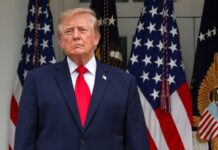
When CNN’s Kaitlan Collins asked Trump point-blank whether the $1.8 billion fund was dead or on hold, the President responded: “I’d have to ask the lawyers.” [2] That answer — from the man whose name is on the IRS lawsuit that generated the settlement — is either a sign of genuine disengagement from a major DOJ policy decision or a deliberate dodge to avoid locking in a public position. Neither explanation is reassuring for an administration that ran on accountability and transparency in government.
FROM THE TRENCHES
Tonight at 9 PM, Trump will address the nation from the Oval Office.
This was not on the schedule 48 hours ago.Three things happened in the last 72 hours that forced this address:
One.
The $1.8 billion Anti-Weaponization Fund was scrapped.
Not delayed.…— GP Q (@argosaki) June 4, 2026
The broader irony is hard to miss. The fund was created to address real and documented abuses — the weaponization of federal agencies against political opponents, something Trump supporters have watched happen for years. [9] The underlying grievance is legitimate. But the execution was messy enough to alienate Republican allies, invite a court injunction, and leave the President himself unable to say whether his own administration’s signature redress program still exists. If the goal was to deliver accountability for government overreach, the handling of this fund did not inspire confidence that the administration had a clear plan to get there.
Sources:
[1] YouTube – Trump says he doesn’t know about the fate of $1.8B anti-weaponization …
[2] Web – Justice Department Announces Anti-Weaponization Fund
[3] YouTube – Justice Department scraps Trump’s ‘anti-weaponization fund’ after …
[6] YouTube – Trump’s DOJ backs down from the “anti-weaponization …
[7] YouTube – What led to the DOJ stopping work on Trump’s “anti-weaponization …
[9] Web – Ending The Weaponization Of The Federal Government
© rightwingjournal.com 2026. All rights reserved.