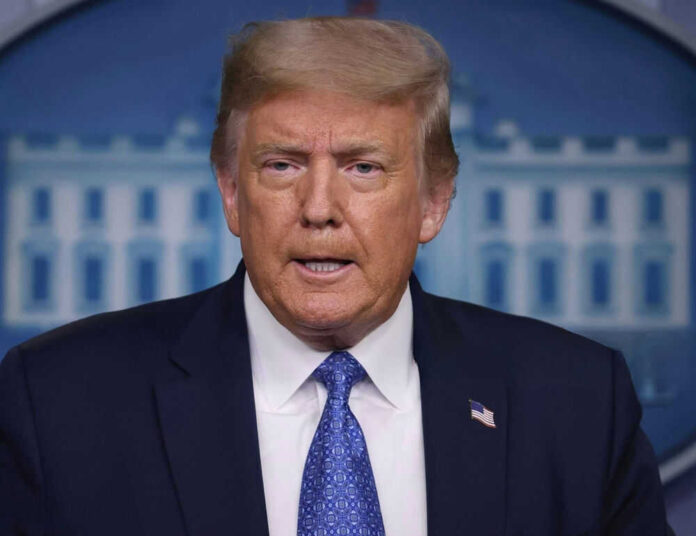
(RightWingJournal.com) – Donald Trump’s latest remarks in the Oval Office have once again ignited a storm of controversy, leaving many to question the boundaries of political discourse.
Story Overview
- Trump called Rep. Jasmine Crockett “a very low IQ person” during an Oval Office event.
- He joked that Somalia should “take back” Rep. Ilhan Omar, sparking allegations of xenophobia.
- The remarks were made at a policy event, shifting focus from substance to personal attacks.
- Omar responded by calling Trump a “lying buffoon” on social media.
Trump’s Oval Office Remarks
On September 25, 2025, Donald Trump used an Oval Office signing ceremony as a platform to launch verbal attacks against Democratic Representatives Jasmine Crockett and Ilhan Omar. He labeled Crockett as a “very low IQ person,” questioning her capability to serve in Congress. Trump’s remarks about Omar were particularly contentious, joking that Somalia should “take back” the congresswoman, who was born in Somalia. These comments quickly overshadowed the event’s original agenda, drawing media attention for their personal and racially charged nature.
The setting of these remarks, an official White House policy event, underscores a pattern seen during Trump’s presidency where formal government business often blurred with partisan attacks. Trump’s rhetoric towards progressive women of color in Congress is not new; it echoes previous incidents, including his infamous 2019 “go back” tweets. His strategy seems aimed at energizing his base while discrediting his opponents, but it raises questions about the decorum expected in political discourse.
Responses and Reactions
Ilhan Omar quickly took to social media to counter Trump’s attacks, calling him a “lying buffoon” and an “embarrassing fool.” Her response reflects the ongoing tension between Trump and progressive Democrats, particularly those in “The Squad,” of which Omar is a part. As of the latest reports, Rep. Jasmine Crockett has not issued a formal response, although her reputation for being combative suggests she may address the remarks in due course.
The lack of response from both the White House and Somalia’s government suggests a recognition of the comments as rhetorical flourishes rather than substantive policy discussions. However, the incident has reignited debates over race, xenophobia, and political decorum, themes that have been central to American political discourse in recent years.
The Broader Implications
In the short term, Trump’s remarks have intensified partisan tensions and kept the media spotlight on his provocative style. The long-term implications are more complex, potentially contributing to further polarization in U.S. politics. Such language can reinforce divisions along racial and ideological lines, influencing voter perceptions and potentially affecting the political landscape as the country heads into future election cycles.
While there is no direct economic impact from the remarks, the social and political consequences are significant. Trump’s comments may energize his base, which often views his remarks as a challenge to political correctness, while simultaneously mobilizing opposition among progressive and minority communities who see the rhetoric as racist and xenophobic.
Expert Opinions
Political analysts highlight that Trump’s rhetoric aligns with his strategy of stirring controversy to dominate media cycles and energize his supporters. Scholars caution against the normalization of such language, warning it could erode trust in democratic institutions and undermine social cohesion. Media coverage of these incidents reflects a broader challenge facing the government: maintaining decorum and bipartisanship in an increasingly divided political climate.
Diverse opinions emerge in response to Trump’s comments; his supporters appreciate his directness, while critics emphasize the damaging nature of his rhetoric. The major news outlets, including Fox News and Forbes, have reported the remarks with direct quotes and video evidence, reinforcing the veracity of the incident. However, Trump’s anecdote about discussing Omar with Somalia’s president remains unverified, suggesting it was intended more for rhetorical effect than as a factual statement.
Copyright 2025, rightwingjournal.com