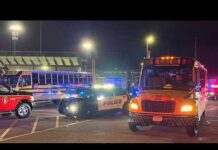
Coast Guard personnel exchanged gunfire near Garceno, Texas, and within days the U.S. shifted hundreds of troops and gear into the Rio Grande Valley to reinforce border security.
Story Snapshot
- Coast Guard reported taking fire from across the border and returning fire near Garceno on Sept. 26.
- No injuries or damage to Coast Guard assets were reported in the incident.
- U.S. forces moved hundreds of troops and equipment to the Rio Grande Valley soon after.
- Command officials framed the move as rapid reinforcement to support ongoing operations.
What Happened Near Garceno, Texas
Coast Guard forces operating with federal partners encountered gunfire from the Mexican side of the border near Garceno, Texas, on Sept. 26. Coast Guard personnel returned fire during the interdiction mission. The service said no injuries occurred and no assets were damaged. The operation took place on the Rio Grande, where joint teams often interdict river crossings and smuggling attempts. The Coast Guard statement emphasized cooperation with U.S. Border Patrol and other agencies to secure the border and protect the public.
Officials have not publicly identified who fired from the Mexican side. Several reports referenced suspected criminal groups but did not present confirmed identities. The core facts from the Coast Guard remained consistent across outlets: shots were fired at U.S. personnel, they returned fire, and the engagement ended without reported casualties. This aligns with past riverine risks along that stretch of the Rio Grande, where complex terrain and fast-moving encounters are common.
Reinforcement in the Rio Grande Valley
In the days after the shooting, the U.S. military moved hundreds of service members and equipment into the Rio Grande Valley. Joint Task Force–Southern Border described the shift as part of a rapid reinforcement to support federal partners working the sector. Coverage placed the surge at roughly five hundred troops, though some reports used “hundreds,” reflecting varying public figures. The stated focus included border security, disrupting criminal activity, and protecting personnel on joint missions.
U.S. Northern Command messaging tied the movement to an ongoing effort to strengthen posture, rather than a simple rotation. Reports linked the reinforcement to named operations focused on support roles at the border. While specific units, platforms, and any changes to rules of engagement were not detailed in public statements, the emphasis on quick support signaled a desire to deter further violence and backstop front-line teams along the river.
Why This Moment Matters
This episode highlights how quickly border incidents can lead to a larger security response. The pattern echoes prior eras when both Republican and Democratic administrations used military support to strengthen the border during tense periods. Past examples include National Guard deployments under Presidents George W. Bush and Barack Obama. Those moves aimed to assist civilian agencies, bolster surveillance, and add manpower when threats or crossings surged seasonally or in response to specific events.
The Garceno exchange also taps into shared public frustrations. Many Americans on the right cite rising criminal activity, drug flows, and the strain on local resources. Many on the left worry about militarization, civil liberties, and the gap between high spending and limited results. Both sides often agree on one point: Washington reacts after a crisis but struggles to fix root causes, like cartel cash flows, asylum backlogs, and labor demand that pulls migrants north. The latest reinforcement fits that cycle.
Knowns, Unknowns, and What to Watch
Confirmed facts are straightforward: gunfire hit a joint Coast Guard operation, U.S. personnel returned fire, and no injuries or damage were reported. Soon after, hundreds of troops and equipment shifted into the Rio Grande Valley to reinforce operations. Public reports did not name the shooters with certainty, did not share detailed after-action files, and differed on the exact troop count. Those gaps are common early in security incidents but do not change the core timeline now on record.
Report: 500 Troops Deploy to Rio Grande Valley in Texas After Drug Cartel Members Shoot at USCG Vessel: Roughly 500 troops are reportedly deploying to the Texas Rio Grande Valley after a U.S. Coast Guard (USCG) vessel was fired upon by drug cartel […]
Source dlvr.it/TVlbj1 pic.twitter.com/efuSzgAItF
— American Greatness (@theamgreatness) October 2, 2026
Watch for official after-action releases from the Coast Guard or statements from U.S. Northern Command that clarify the incident narrative, troop numbers, and support tasks. Also track any coordination steps with Mexican authorities, who sometimes run mirror operations on their side of the border during flare-ups. Finally, monitor whether this surge stays short-term or becomes a longer wave, which would signal fresh concerns about cross-border violence and the safety of personnel working the river.
Sources:
yahoo.com, thetexan.news, en.cibercuba.com
© rightwingjournal.com 2026. All rights reserved.