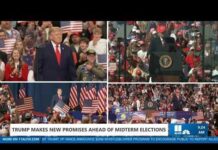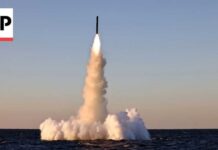
President Trump said the United States “obliterated” Iran’s key nuclear sites and warned that heavier bombing would follow if Tehran does not yield, signaling a wider war posture that bypasses Congress and alarms legal experts.
Story Snapshot
- Trump said U.S. strikes destroyed Iran’s Fordo, Natanz, and Isfahan nuclear sites.
- He vowed to “hit hard” again and escalate if Iran resists a deal.
- Reuters said bombing would continue as long as needed, marking a major gamble.
- Legal scholars and faith groups called the campaign unlawful and immoral.
What Trump Announced And What It Means
President Trump told the nation the U.S. hit three core nuclear facilities in Iran—Fordo, Natanz, and Isfahan—and said the aim was to crush Iran’s enrichment capacity. He called the strikes a “spectacular success” and claimed the facilities were “completely and totally obliterated”. He later added that bombing would continue as needed, framing it as necessary to stop a threat and force talks on U.S. terms. The message set a clear line: comply or face more air power.
Trump also promised more strikes “today,” and warned of a “much higher level” of bombing if Iran does not accept a peace framework. That stance pairs pressure with an open-ended timeline. Reuters described the air campaign as one of Trump’s biggest foreign policy gambles, with the White House betting that overwhelming force can coerce Tehran faster than sanctions or talks alone. Supporters argue the approach deters attacks and resets red lines without a ground war.
Escalation Risks And War Powers Concerns
Many legal and defense experts said the bombing run looks like war without a vote, reviving a long fight over the Constitution’s war powers. Analysts told CNN and USA Today that prolonged, large-scale strikes exceed limited self-defense and need Congress to authorize them. The State Department’s top lawyer defended self-defense, but Reuters reported that many international law experts still said the U.S. case under the United Nations Charter is weak. The split underscores a basic fear: power without oversight drifts.
Faith groups and advocacy organizations added moral and legal critiques. Christian leaders and church networks called the airstrikes reckless and unjustified, saying they violated international law and risked civilian harm. An Australian security forum labeled the campaign “illegal, unnecessary and unjust,” arguing Iran had not attacked the United States and the United Nations Security Council had not approved force. These objections echo a broad public worry that leaders start wars first and explain later.
Strategic Stakes For Americans At Home
Escalation with Iran often hits American wallets and strains military families. Oil markets react to threats against shipping routes and export hubs, raising fuel and transport costs. Reuters framed Trump’s Iran strikes as a high-risk bet with unclear payoffs. Critics at Brookings warned that more pressure can spark harder pushback, not surrender, meaning cycles of attacks could grow while Iran adapts. If that happens, the United States could pay more and gain less, with no clear off-ramp.
Voters on the right and the left share doubts about open-ended wars. Many remember long, costly fights that Washington never clearly defined or won. Trump’s promise to “hit hard” may please those who want strength, but it also raises the old question: what is the finish line? ABC’s transcript touted tactical gains. The harder test is strategic: can air power alone change Iran’s choices without dragging America into deeper conflict, higher prices, and another round of promises that Washington cannot keep?
Sources:
pbs.org, trumpwhitehouse.archives.gov, reuters.com, youtube.com, cnbc.com, en.wikipedia.org, foxnews.com, commondreams.org
© rightwingjournal.com 2026. All rights reserved.