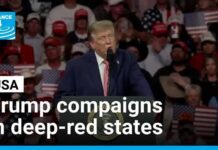
President Trump promised $1 million for tips that lead to a voter-fraud arrest and conviction, but offered no plan for how the payout would actually work.
Story Highlights
- Trump pledged $1 million for tips that result in both arrest and conviction for voter fraud.
- The promise applies to past elections and the 2026 midterms, eight days away.
- The White House did not provide funding, rules, or a reporting process.
- Researchers say proven voter fraud is rare across recent U.S. elections.
What Trump Announced, And The Bar He Set
On October 26, President Trump said he will pay $1 million to anyone who reports voter fraud that leads to an arrest and a conviction. He said the reward covers past elections and the coming 2026 midterms. He framed the move as a way to bring forward actionable tips, not just complaints. The standard he set is high. A tip must help produce both an arrest and a conviction in court to qualify for payment.
Trump’s written post repeated that both an arrest and conviction are required. That condition could screen out weak tips and false leads. It also creates a timing problem. Convictions take months or years, not days. The promise arrives less than two weeks before voting, so any payment based on new tips would likely come long after ballots are cast. The pledge still drew wide attention because of its size and timing.
The Missing Pieces: Funding, Authority, And Rules
News outlets asked how this would work in practice. Reports said the White House did not name a funding source, a legal authority, or an agency to run the program. Officials did not publish a reporting hotline, intake form, or standards to judge which tip “led to” a case. Without rules, it is hard to know who qualifies, when payment would be made, or how appeals would be handled. Those gaps raised bipartisan questions about execution.
Clear rules matter when money is on the line. Big rewards can draw duplicate, partisan, or bad-faith claims. Agencies that run tip programs usually spell out intake steps, evidence checks, and privacy safeguards. None of that has been released so far. That leaves the public to guess how to report, who will read tips, and how leads will be sorted. Absent that clarity, election workers and voters could face a rush of accusations without a filter to separate noise from facts.
What The Data Say About Voter Fraud Frequency
Independent research finds proven voter fraud is rare. SciLine, which summarizes academic work, reports that documented fraud cases, including mail ballot fraud and noncitizen voting, are uncommon. One estimate found about four fraud cases for every 10 million mail ballots from 2016 to 2022. Those figures do not say fraud never happens. They do show it is infrequent compared with the huge number of votes cast.
The American Bar Association highlighted an Associated Press review of the 2020 election in six swing states. That review found fewer than 475 potential cases among more than 25 million votes, and even those cases were unconfirmed at the time of reporting. Courts also heard many disputes after 2020. Most cases failed on the evidence. Together, these records suggest real cases exist, but they rarely approach numbers that can sway statewide results.
Why The Timing And Process Matter For Public Trust
Announcing a large reward days before voting can cut both ways. Supporters may see a strong push for integrity. Critics may see a campaign message that invites a flood of claims that cannot be checked before Election Day. When rules and guardrails are missing, pressure can shift onto local clerks, poll workers, and ordinary voters. That strain feeds a belief shared by many on left and right: institutions rush headlines, but delay details and accountability.
President Donald Trump has announced a $1 million reward for anyone who reports voter fraud from previous elections or the upcoming 2026 midterm elections if the information leads to the arrest and conviction of those responsible.
“Anybody reporting Voter Fraud in the past Elec pic.twitter.com/7X9FFsX9cH
— PHL17 (@phl17) October 27, 2026
Trust grows when leaders pair promises with clear plans. A formal directive could name the funding, the legal basis, the managing office, and a simple reporting path. Public dashboards could track tips, referrals, arrests, and convictions while protecting privacy. If the goal is facts over noise, strong intake rules and open metrics would help. Without them, this offer risks adding heat to an already tense season, while leaving citizens unsure how to help or whom to trust.
Sources:
youtube.com, abcnews.com, nbcnews.com, nytimes.com, brennancenter.org
© rightwingjournal.com 2026. All rights reserved.