Behind the quiet July 4th homecoming of a Chinese pastor to Los Angeles lies a stark reminder that, for many people of faith, freedom still depends less on rights and more on raw political leverage.
Story Snapshot
- Chinese house church pastor Ezra Jin was freed after nine months in detention and arrived in Los Angeles on July 4.
- His family credits direct action by Presidents Donald Trump and Xi Jinping, showing how individual liberty can hinge on backroom talks, not open law.
- Eight other Zion Church leaders are still detained in China, and Beijing has offered no sign of a broader shift on religious freedom.
- The case exposes how both Washington and Beijing use human lives inside a wider power game, while ordinary believers remain caught in the middle.
How a Chinese Pastor Landed in a Beijing Crackdown
Chinese authorities detained Pastor Ezra Jin Mingri on October 10, 2025, during a coordinated sweep against leaders of Beijing’s Zion Church and related house churches. Rights group Fortify Rights called it the largest nationwide crackdown on an urban unregistered church in more than four decades, underscoring how the Chinese state sees independent Christian activity as a political security risk, not a protected faith practice. Jin and 17 other leaders were later charged with “illegally using information networks,” essentially for sharing Christian teaching online.
China’s wider record puts this case in context. For at least a decade, China has ranked among the world’s most restrictive governments on religion, routinely banning groups, closing churches, jailing believers, and demolishing or stripping church buildings. A United States government report described officials forcing Christians to sign papers renouncing their faith, installing cameras in churches, and closing many house churches, including pressure on Zion Church members years before Jin’s arrest. Under President Xi Jinping, policy has aimed to “Sinicize” all religion, forcing churches to align with Communist Party ideology or face punishment.
These patterns explain why many Americans on both the right and left see the Chinese Communist Party as a textbook example of an unaccountable ruling elite. The government in Beijing claims to protect religious freedom, yet its laws and police actions keep tight control over what people can believe, preach, and share online. That gap between words and reality looks familiar to U.S. readers who feel their own institutions talk about rights and dignity while protecting insiders first. It feeds the sense that ordinary people of faith, in any country, are expendable when power is at stake.
Trump’s Quiet Pressure and Xi’s Calculated Intervention
During Pastor Jin’s detention, his daughter Grace testified before the United States Congress, explaining that the family had no direct contact with him after his arrest and that Zion Church’s only “crime” was trying to stay faithful outside state control. Her testimony came as American lawmakers and advocacy groups pushed the White House to act, arguing that Jin’s detention mattered not only for one family but for the credibility of United States policy on religious freedom. Grace and her siblings are American citizens, which added diplomatic weight and political urgency.
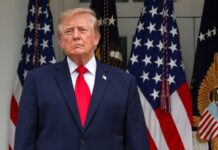
In late April 2026, policy groups formally urged President Donald Trump to raise Jin’s case with Chinese leader Xi Jinping, calling it an important test of Trump’s promise to defend persecuted Christians overseas. In May, during a state visit to Beijing, Trump did exactly that, pressing Xi directly to release the pastor and allow him to join his family in America. Trump later told reporters that Xi would “strongly consider” the case, and Jin’s daughter publicly thanked the administration, saying she believed Trump’s team would secure her father’s freedom.
On July 4, 2026, that belief became reality. Advocacy group ChinaAid announced that Pastor Jin had been freed from custody and had arrived safely in Los Angeles to reunite with his family. In a statement, the family thanked Trump and his administration while also crediting what they described as direct intervention from Xi, and they expressed hope that this might signal a “positive turn” for people of faith in China. For supporters of Trump’s “America First” approach, the release looks like proof that focused pressure, not vague global talk, can deliver concrete wins for persecuted believers abroad.
Why This Is Not a Turning Point for Freedom in China
Major international outlets, along with human rights groups, caution against reading Jin’s release as a real change in Chinese policy. Reports from Al Jazeera, the British Broadcasting Corporation, National Public Radio, and others all stress that at least eight Zion Church members remain detained, with no formal charges or clear legal paperwork for some. A Sky News report also highlights that, even after United States diplomacy freed Jin, these fellow believers are still in cells, a sharp contrast to any story of broad improvement.
ChinaAid Welcomes Release of Pastor Ezra Jin to US, Calls for Freedom for All Prisoners of Faith
MIDLAND, Texas — July 5, 2026 — ChinaAid welcomes with profound gratitude the release of imprisoned Chinese house church pastor Ezra Jin (Pastor Jin), who arrived safely in Los…
— Bob Fu 傅希秋 (@BobFu4China) July 4, 2026
Beijing has stayed silent about the deeper meaning of the release. China’s foreign ministry has not issued any statement linking Jin’s case to a shift in law or practice, and some reports say there was “no immediate comment” at all. Meanwhile, the charge against Jin—“illegal use of information networks” under Article 287-1—has not been repealed or narrowed, leaving the legal weapon that put him behind bars fully intact. That strongly suggests this was an exception for one high-profile prisoner, not a loosening of the screws on underground churches.
Human rights researchers continue to describe a severe deterioration in religious freedom across China, including pressure on unregistered Christian churches, Muslim communities, and other groups that refuse to submit to state-approved religious bodies. The United States Commission on International Religious Freedom has documented how unregistered churches face surveillance, harassment, eviction, and even imprisonment when they resist control, a pattern that has only deepened under Xi’s “sinicization” line. Jin’s legal team did secure a narrow win—official permission to receive Bibles in custody—but even that came only after a formal challenge, and it did nothing to help the many others still jailed for their faith.
What This Case Reveals About Power, Faith, and the “Deep State”
For Americans already skeptical of both parties and of distant elites, the Essex story cuts two ways. On one hand, it shows that when a United States president makes a persecuted Christian a genuine priority, and is willing to spend political capital, lives can change. Trump’s direct ask to Xi, backed by congressional pressure and media attention, moved a foreign authoritarian government that has little reason to yield on church matters. That is a reminder that leadership choices still matter, even in a system many voters see as broken.
On the other hand, the story exposes how fragile basic freedoms are when they depend on quiet bargains between powerful men instead of clear rights that any citizen can claim. Jin walked free because he had an American daughter with a platform, a president willing to push, and a foreign leader who saw some advantage in saying yes. The eight Zion Church members still locked up lack that leverage, even though their faith and charges are the same. That gap will feel familiar to many Americans who think their own justice system works one way for the connected and another way for everyone else.
For conservatives, the case feeds frustration that Western corporations and global institutions still do business with Beijing while pastors and lay believers are jailed over online Bible teaching. For liberals, it highlights how widening gaps between the powerful and the powerless are not just about money, but also about who gets to believe and speak without fear. And for the growing number of people across the spectrum who distrust both political parties, Jin’s journey from a Beihai cell to a Los Angeles airport is both a small victory and a warning: when freedom depends on backroom deals, it is never truly secure, whether in China or here at home.
Sources:
redstate.com, aljazeera.com, fortifyrights.org, instagram.com, youtube.com, npr.org, reddit.com, cruz.senate.gov, nytimes.com, china.usembassy-china.org.cn
© rightwingjournal.com 2026. All rights reserved.