President Trump’s “bigger than Yalta” boast after a first-ever three-way summit with China and Russia lit up critics while exposing how little the declaration actually changed on the ground.
Story Snapshot
- Trump, Xi, and Putin held the first formal three-way summit and issued a broad “peace” declaration.
- Trump pushed a Yalta comparison; critics called it exaggerated and historically off-base.
- The 90-minute meeting produced symbolism, not a concrete settlement on wars or borders.
- European and Ukrainian voices rejected any “Yalta 2.0” idea and warned against deals over their heads.
A Rare Trio Meets, With Big Optics and Modest Outcomes
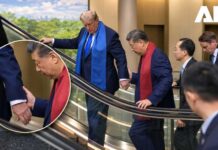
On November 19, 2026, President Trump met China’s Xi Jinping and Russia’s Vladimir Putin in Shenzhen for what observers called the first formal three-way summit among leaders of the United States, China, and Russia. The session ended with a joint “Declaration Toward Peace” that stressed nuclear-risk reduction and dialogue, but offered few hard details. The event’s novelty and the photo line-up carried clear symbolic weight across global media coverage.
Trump quickly amplified the history talk by sharing an image that compared the Shenzhen trio to the Allied leaders at Yalta. He framed the meeting as “bigger than Yalta,” tying today’s tensions to a famous postwar gathering. The post drew fast fire from commentators who saw the claim as inflated and tone-deaf. Coverage said the picture fueled a fight over whether the summit made any real change or was just high-gloss stagecraft.
What the Declaration Said—and Did Not Say
The declaration reaffirmed that nuclear war cannot be won and must never be fought, and it called for continued dialogue on risk reduction. It also touched on future energy supplies and reform at the United Nations. Analysts noted the absence of specific deadlines, mechanisms, or volumes. There was no new settlement on Ukraine, Taiwan, or Iran, and no map lines moved. That gap led many to judge the text as cautious and general rather than game-changing.
Reports also stressed the brief format. The Shenzhen session reportedly lasted about 90 minutes, a sharp contrast to the days of negotiation at Yalta in 1945. Commentators argued that the shorter time window and today’s fractured alignments do not match the wartime context that defined Yalta. They said the summit looked more like risk management than like a redesign of the global order. Even some sympathetic voices called it symbolism over substance.
Europe and Ukraine Push Back on “Yalta 2.0”
European leaders rejected the Yalta analogy because the history links to a divided continent and the Cold War’s start. German Chancellor Friedrich Merz said a “Yalta format” would not bring peace. Ukraine’s Foreign Minister Andrii Sybiha said this was not “the Yalta of Putin’s dreams,” and urged Russia to end the war. These reactions underscored a core concern: no one wants great powers deciding Europe’s fate without Europe at the table.
Three leaders at one table: why was it compared to #Yalta and were the foundations of a new world order laid?#Trump #Xi #Putin pic.twitter.com/UfCIG5BGms
— The Geopost (@theGeopost) November 22, 2026
Critics added that the joint text did not even mention Ukraine, despite its central role in European security and in Russia’s ongoing war. That omission made it harder to argue that the summit delivered a major shift. Outlets also noted how Putin benefits from sharing a stage with Trump and Xi, while Trump gains a claim of global dealmaking. Those political incentives fed doubts that the Yalta analogy reflected actual leverage or outcomes rather than image work.
Why This Matters for Americans Across the Spectrum
For many Americans, the summit scratched at a deeper worry: powerful leaders stage big shows while the hard problems grind on. Conservatives see elites chasing photo ops while borders, energy costs, and inflation remain tough. Liberals see the same theater while inequality and war risk worsen. The Shenzhen meeting fits that pattern. The optics were grand. The text was thin. The daily realities for families and soldiers did not shift in a measurable way.
Still, one piece matters even without sweeping deals. The three largest nuclear powers put risk-reduction language on paper together. That message does not fix today’s wars, but it affirms a red line against nuclear use. In a tense era, even basic guardrails can help. The next test is simple and strict: do the governments turn words into steps, like hotlines, incident rules, and timelines the public can verify? If not, the “Yalta” talk fades, and the photos remain.
Bottom Line: Separate the Show From the Substance
Shenzhen was historic for who sat at the table and modest for what they signed. Trump’s Yalta comparison drew attention, but the facts fit a smaller claim: three powers promised to keep talking about nuclear dangers and global risks. Voters should watch for proof of follow-through. Transparent steps and timelines build trust. Grand labels without delivery deepen the belief that the system serves the few at the top and leaves everyone else waiting.
Sources:
mediaite.com, theatlantic.com, yahoo.com, edition.cnn.com, foreignpolicy.com, eurasiareview.com, charlotteobserver.com, al-monitor.com, rferl.org
© rightwingjournal.com 2026. All rights reserved.