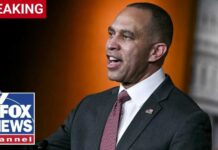
Rep. Thomas Massie just put the House on record to judge whether a Cabinet secretary helped wage an unauthorized war.
Story Snapshot
- Massie filed eight impeachment articles against Secretary Pete Hegseth, centered on the War Powers Resolution.
- The filing claims hostilities against Iran continued without legal authorization and past statutory deadlines.
- Hegseth rejects the charges as political theater and defends the Iran campaign as lawful and necessary.
- Few Cabinet officials have ever faced impeachment, underscoring the stakes of this vote.
What Massie Filed And Why It Matters
Rep. Thomas Massie of Kentucky introduced eight articles to impeach Secretary of War Pete Hegseth. Massie argues Hegseth led or sustained hostilities against Iran without a congressional declaration of war, statutory authorization, an attack on the United States, or an imminent threat. Article I cites Section 2(c) of the War Powers Resolution, and other articles allege the campaign ran past statutory time limits. The filing forces the House to confront how wars start and end under current law.
Massie’s resolution also says both chambers directed a withdrawal through a concurrent resolution and that Hegseth ignored that directive. The summary frames this as defiance of Congress’s power over war and peace. The document further alleges failures to protect civilians. The filing runs 34 pages, with several legal theories, which signals a formal attempt to establish impeachable conduct rather than a single-issue protest of policy choices.
How The War Powers Dispute Frames The Case
The War Powers Resolution sets reporting triggers and 60-day limits, with a possible 30-day withdrawal period. Massie’s case claims the Iran operations continued past those deadlines without the needed legal basis. That argument sits in a gray zone that has dogged every administration since 1973. Courts rarely resolve these fights, leaving Congress and the President to battle over practice and power. The House is now testing that struggle through impeachment rather than a simple policy vote.
Some claims in the filing still lack publicly shared proof. The materials summarized by reporters and the press release do not include operational orders signed by Hegseth or incident-level data tying him to specific civilian deaths. The record also does not show the full text or legal effect of the cited concurrent resolution. Those gaps do not end the inquiry, but they shape what evidence members will demand if this moves beyond headlines into fact-finding.
What Hegseth And Allies Say In Response
Secretary Hegseth calls the impeachment push a sham and says the Iran campaign is lawful and designed to stop Tehran from getting a nuclear weapon. He portrays the Pentagon’s actions as part of President Trump’s agenda and says he will continue that course. Supporters frame the effort as restoring deterrence and readiness. These defenses stress purpose and policy success but do not, in current public statements, walk through the specific War Powers timing claims.
“We're not worried about that,” Hegseth told reporters in Newport, R.I., on Monday when asked about Massie’s impeachment salvo.
More on Hegseth's response: https://t.co/7aDUuICcYm pic.twitter.com/hkglxdWKEv
— WFRV Local 5 (@WFRVLocal5) November 9, 2026
An added wrinkle is chain of command. A former senior official argued that Presidents, not Cabinet secretaries, own the big war calls. If Congress wants to prove personal misconduct by a secretary, it will likely need signed directives, legal memos, or testimony showing Hegseth initiated or prolonged operations without lawful cover. That is harder when the executive branch controls the records, a fact that often lets power tilt away from public oversight.
Why This Fight Resonates Beyond One Cabinet Official
Only two Cabinet secretaries have ever been impeached. That rarity makes this a test of whether lawmakers will use impeachment to police unauthorized force, not just corruption. Many Americans across the spectrum see a government that dodges accountability while wars drift without clear goals, votes, or end dates. This case puts those concerns on the floor: who decides on war, what counts as authorization, and what happens when deadlines pass without a vote.
What To Watch Next As Congress Weighs The Evidence
Watch whether House leaders allow a clean floor debate and whether committees seek documents and testimony. Key items include the full 34-page resolution, strike logs, civilian harm assessments, legal opinions, and the exact text and votes on the cited concurrent resolution. Clear answers on dates, deadlines, and orders will decide if this is a historic check on executive war-making or another chapter where process and partisanship drown out the facts.
Sources:
nbclosangeles.com, cbsnews.com, massie.house.gov, wlwt.com, npr.org, adn.com, reuters.com
© rightwingjournal.com 2026. All rights reserved.