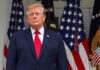
Days before Michigan votes, President Trump labeled Abdul El-Sayed “Muslim Brotherhood” and “a jihadist,” but reporters have found no proof tying him to any terrorist group.
Story Snapshot
- Trump escalated claims that El-Sayed is linked to the Muslim Brotherhood, repeating them at events and in a video.
- Independent reporting says there is no evidence of El-Sayed’s affiliation; he has publicly disavowed the group.
- El-Sayed’s past criticism of U.S. aid to Israel and of Trump’s war policy is central to the political fight, not proof of terrorism.
- The timing aims at late voters, raising fears of “guilt by association” in a tense election season.
What Trump Alleged And Why It Landed So Hard
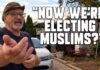
President Trump said in an Oval Office video that El-Sayed was “absolutely Muslim Brotherhood,” and called him a “jihadist” at rallies across Michigan less than two weeks before Election Day. Former Representative Mike Rogers echoed the theme while pointing to El-Sayed’s criticism of Israel’s Gaza war and alleged family ties. These words hit core voter fears about national security, loyalty, and the risk of violence. They also frame policy debate as a question of safety.
Republicans control Congress and the White House, so the message carries institutional weight. Supporters argue it warns against a threat. Critics warn it blurs lines between ideas, identity, and violence. That matters in communities that already fear rising antisemitism and rising anti-Muslim bias. The charge can sway late deciders, especially older voters worried about terrorism and social unrest. Campaigns often use simple labels because they stick in a crowded media space.
What Reporters And Records Actually Show
Reuters reported that El-Sayed denied any tie to the Muslim Brotherhood and said he would disavow the group; the outlet said it found no evidence tying him to it. The Los Angeles Times also reported no evidence of affiliation in the public record. PolitiFact concluded he has not advocated jihadist violence and is not a member of the Muslim Brotherhood. These findings undercut the claim, which lacks membership records, donations, or named witnesses.
El-Sayed’s statements focus on policy. He opposed U.S. tax dollars buying weapons for foreign countries and criticized spending he described as “subsidiz[ing] apartheid in the West Bank,” saying funds should help Detroit instead. He also pushed to curb Trump’s war powers, calling the conflict illegal and saying “Donald Trump’s war is on the ballot”. These positions anger hawks but, by themselves, do not prove support for terrorism. Reporters stress that distinction in their coverage.
Why Timing And Framing Matter To Voters
Reuters framed the late push as a bid to move key blocs in and around Detroit before votes are cast. Repetition by a president and a Senate candidate can sound like corroboration to casual viewers, even without new proof. That creates an information tilt. Voters then hear the label “jihadist” more than the caveat “no evidence.” The tactic also shifts focus from inflation, immigration, and energy costs to identity and fear in the final days of a race.
Both left and right readers share a core worry: leaders use fear to dodge hard problems. Many believe elites play identity games while prices climb, schools struggle, and borders feel broken. This fight fits that pattern. Strong claims spread fast; evidence grinds slow. Courts have long warned against guilt by association. Voters can demand records, not rumors: names, dates, documents, and agency findings. Absent that, skepticism toward any side’s smear is healthy civic hygiene.
How To Read Claims Like This Without Getting Played
Start by sorting policy, ideology, affiliation, and violence. Specific quotes on aid to Israel or war powers are policy. Alleged group membership needs documents. Violence requires proof of acts or material support. Next, check whether a neutral outlet found records. In this case, reporters did not find them, and El-Sayed disavowed the group. Finally, watch the calendar. Late hits often aim to freeze debate before facts can catch up.
TRUMP LEVELS EXPLOSIVE TERRORISM-RELATED ALLEGATIONS AGAINST MICHIGAN SENATE CANDIDATE!
President Trump accuses Abdul El-Sayed and members of his family of having ties to extremist organizations, citing alleged connections to al-Qaeda and the Muslim Brotherhood.
“Have you ever… pic.twitter.com/GwivvEB6SR
— Real America's Voice (RAV) (@RealAmVoice) October 25, 2026
If evidence exists, it should be public and verifiable. If it does not, voters should refuse to reward fear-first messaging. The country needs leaders who argue budgets, borders, wages, and energy policy on facts, not on labels that divide neighbors. That is how we hold both parties to account and keep focus on problems Washington keeps dodging.
Sources:
pjmedia.com, rmb.reuters.com, reuters.com, michiganpublic.org, politifact.com, wlns.com, thehill.com
© rightwingjournal.com 2026. All rights reserved.