(RightwingJournal.com) – The loudest claim about the Iran strikes—“1,000 targets in 24 hours” with Tomahawks and B-2s—collapses under scrutiny because the public evidence still doesn’t match the hype.
Quick Take
- No verified reporting confirms Tomahawks, B-2 stealth bombers, or attack drones hit “over 1,000” Iranian targets in a 24-hour blitz.
- Multiple sources do report coordinated U.S.-Israel strikes on Feb. 28, 2026, targeting Iranian military, missile, nuclear, and naval assets, plus senior leadership.
- Iran retaliated with missiles and drones against Israel and U.S. bases across the region, raising the risk of a wider war.
- Conflicting statements emerged inside Iran about leadership casualties, even as other reporting described Ali Khamenei’s death.
What the U.S.-Israel Operation Actually Reports—And What It Doesn’t
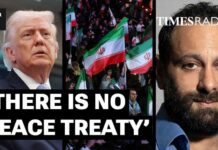
Reporting on the Feb. 28, 2026 strikes converges on a core set of facts: the United States and Israel conducted coordinated attacks against Iranian military infrastructure and leadership targets, and President Donald Trump publicly framed the operation as pressure on the regime with an appeal to the Iranian people. Where coverage diverges is on the dramatic online claim that Tomahawks, B-2 bombers, and attack drones hit more than 1,000 targets in 24 hours—details not verified in the provided sources.
Public accounts generally describe “hundreds” of military-related sites hit, not a four-digit target list, and they do not confirm specific U.S. platforms like B-2s or Tomahawk salvos as the backbone of the operation. That gap matters because Americans deserve clarity when headlines race ahead of confirmed facts—especially with U.S. forces, allies, and oil shipping lanes exposed to retaliation. With key operational specifics likely classified, the responsible takeaway is that scale and weapon claims remain unproven.
How the Crisis Built: Protests, Failed Talks, and a Military Buildup
The timeline preceding the strikes included Iranian protests and regime violence, plus U.S. force movements and stalled nuclear diplomacy. Sources describe mass unrest inside Iran met by force from security elements tied to the regime, while U.S. decision-making accelerated through January and February. Indirect nuclear talks were attempted in Muscat and later in Geneva, but the process deteriorated as threats escalated and maritime pressure points—like the Strait of Hormuz—reentered the picture as leverage.
U.S. posture also shifted with major naval deployments referenced in the research, creating the kind of deterrent footprint Americans remember from periods when Washington projected strength instead of outsourcing security to global bureaucracies. The research also describes Trump messaging—public warnings and later a post-strike appeal—aimed at forcing strategic decisions in Tehran. The net result was a compressed march from diplomacy to force, with allies tightly aligned and Iran’s leadership under direct pressure.
Leadership Targeting and Conflicting Iranian Messaging
A central development in the reporting is the claim that Iran’s Supreme Leader Ali Khamenei was killed, with confirmation described as emerging around March 1. At the same time, the research notes conflicting statements from Iranian officials, including denial or ambiguity about leadership status. That contradiction is not surprising in a regime that uses information control as a tool of survival, but it does complicate outside analysis and invites misinformation to fill the void.
From a conservative perspective, this is where discipline matters: leadership claims should be grounded in corroborated reporting, not viral posts. The research indicates the operation targeted leadership alongside nuclear, missile, and naval assets, suggesting an intent to degrade command-and-control and reduce Iran’s capacity for immediate counterstrikes. Still, the open-source record summarized here does not support the specific “1,000 targets” narrative, and readers should separate verified outcomes from aspirational messaging.
Retaliation Risk: U.S. Bases, Israel, and Regional Blowback
Iran’s retaliation was swift in the reporting: missiles and drones were launched at Israel and at U.S. bases across multiple countries in the region, with references to a broad set of installations and host nations. This is the kind of escalation that tests the seriousness of deterrence and the readiness of U.S. defenses, because a retaliatory campaign can be designed less to “win” than to impose costs, disrupt shipping, and inflame domestic politics in Western capitals.
Tomahawks, B-2 stealth bombers and attack drones pound over 1,000 Iranian targets in 24-hour blitz https://t.co/lcG00VUrlg #damnews #dam
— Dam News (@damnews_en) March 2, 2026
The strategic danger is straightforward: once state-to-state strikes and counterstrikes begin, miscalculation becomes easier, and regional actors get pulled in whether they want it or not. The research also flags potential economic consequences, including oil price shocks and renewed concerns about passage through the Strait of Hormuz. For Americans still angry about years of inflation and fiscal mismanagement back home, global instability that spikes energy costs is not an abstract problem—it hits family budgets fast.
Sources:
2026 Iran–United States crisis
Iran Update Special Report: US and Israeli Strikes, February 28, 2026
Iran strikes: Trump, Israel, attack timeline, US, Khamenei
Gauging the Impact of Massive U.S.-Israeli Strikes on Iran
Timeline to US attacks on Iran
Copyright 2026, RightwingJournal.com