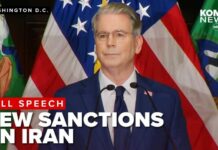
(RightwingJournal.com) – President Trump’s decision to pursue a settlement with Iran, overruling fierce opposition from Israeli Prime Minister Netanyahu and Arab allies, has raised urgent questions about whether the decade-long US-Israeli regional order is now collapsing despite tactical military victories across the Middle East.
Story Snapshot
- Trump negotiated Iran ceasefire against Netanyahu’s objections, undermining the “Greater Israel” strategic vision
- Two-week ceasefire agreement already unraveling with continued Israeli strikes and conflicting interpretations by all parties
- Israeli military achieved tactical wins against Hamas and Hezbollah but failed strategically as Iran’s regime survives intact
- Arab governments must now decide whether to continue backing what analysts call a “failing Israeli-American project”
Trump Overrides Netanyahu’s Strategic Vision
Trump’s administration brokered a fragile two-week ceasefire with Iran less than ninety minutes before the president’s deadline to reopen the Strait of Hormuz. The decision came despite vigorous resistance from Netanyahu, whose opposition was described as central rather than marginal to the regional debate. Arab governments similarly objected but were overridden, signaling Trump’s willingness to act unilaterally when Middle Eastern allies resist his approach. Netanyahu had constructed a vision of a “new Middle East” anchored in Israeli-Arab normalization agreements against Iran, engineered during Trump’s first administration by Jared Kushner. That framework now faces existential strain as Trump pivots toward settlement rather than continued confrontation.
Ceasefire Collapses Within Hours of Agreement
The ceasefire agreement proved “incredibly fragile” from the outset, with both sides interpreting terms differently and creating what foreign correspondents describe as “total confusion.” Israeli strikes in Lebanon continued within hours of the agreement, directly undermining any meaningful pause in hostilities. Israel publicly stated the ceasefire represents “not end of campaign,” clearly signaling intentions to resume military operations. Iran accused the United States of violating ceasefire provisions, while conflicting reports emerged about which specific military activities were permitted under the agreement. The chaos surrounding implementation suggests fundamental disagreement about what was actually negotiated, raising serious doubts about whether any sustainable diplomatic framework exists between the parties involved in this escalating regional conflict.
Tactical Victories Cannot Hide Strategic Failure
Israeli forces achieved significant tactical successes over the past two years, weakening Hamas in Gaza, degrading Hezbollah’s southern capabilities, dismantling Syrian militia corridors, and directly striking Iranian nuclear facilities. These operations represented a decisive shift from the longstanding containment model toward what analysts call “kinetic deconstruction”—systematically using military force to dismantle Iran’s regional infrastructure. The collapse of Bashar al-Assad’s Syrian regime and installation of Ahmed al-Sharaa was viewed as proof that a reordered Middle East could emerge through force. Yet despite these battlefield wins, the broader strategic objective failed utterly: Iran’s regime remains intact, deterrence proved inadequate, and full US military intervention never materialized as Israeli planners anticipated.
The costs of this military campaign were substantial beyond battlefield metrics. International condemnation intensified over Gaza operations that UN experts and the International Court of Justice described as plausibly genocidal. Western governments faced growing disconnect from pro-Palestinian mass movements within their own populations. Israel’s social fabric eroded under prolonged conflict, while the normalization momentum with Arab states stalled after October 7, 2023 exposed the fragility of alignments built against Palestinian resistance. Where decades of US sanctions failed to change Tehran’s behavior, Israel’s kinetic approach dismantled operational pillars of Iran’s regional axis but could not achieve the ultimate goal of regime change or strategic capitulation.
Arab Governments Face Critical Realignment Decision
Arab states that aligned with Israel against Iran now confront an uncomfortable strategic question: should they continue anchoring themselves to what analysts describe as a failing Israeli-American project, or fundamentally recalibrate their regional positioning? The framework they embraced formalized not only opposition to Iran but also opposition to Palestinian resistance, reshaping Middle Eastern political logic around Israeli-Arab convergence. If Trump’s ceasefire matures into permanent settlement, these governments lose the central organizing principle—Iranian threat containment—that justified their controversial normalization with Israel. Regional stability considerations remain pressing, particularly protection of oil infrastructure and economic security, but the strategic calculations that drove alignment with Netanyahu’s vision no longer hold if Washington itself abandons that framework.
The emerging situation reflects deepening frustration with government officials who appear more concerned with preserving their positions than addressing fundamental strategic failures. American taxpayers funded extensive military operations that achieved tactical wins but failed strategically, while Israeli citizens endured prolonged conflict that eroded their society without delivering promised security outcomes. Meanwhile, ordinary people across the region—from Gaza to Beirut to Tehran—bore the devastating costs of policies crafted by elites pursuing grand visions disconnected from ground realities. Whether a genuinely new Middle East emerges will depend less on the schemes of political leaders and more on the endurance and agency of populations who have suffered through these failed experiments in regional reordering.
Sources:
After Iran: Is This the Unraveling of the US-Israeli Order? – CounterPunch
Opinion Article – The Jerusalem Post
Copyright 2026, RightwingJournal.com