
(RightwingJournal.com) – Trump’s new Cuba order aims to choke off the island’s oil lifeline—raising the stakes for America’s security and the risk of a new migration surge toward U.S. shores.
Story Snapshot
- The Trump administration is escalating pressure on Cuba after the January 2026 Venezuela operation that removed Nicolás Maduro, a key energy backer for Havana.
- A January 29 executive order declares a Cuba-related “national emergency” and targets third countries that supply oil to the island through tariff pressure.
- Reporting indicates the administration is exploring a negotiated transition by seeking Cuban government insiders willing to talk.
- Analysts warn that an energy shock could accelerate economic collapse and trigger outward migration—testing U.S. border enforcement priorities.
Trump’s Cuba Escalation Moves From Rhetoric to Economic Squeeze
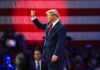
President Trump publicly signaled a hard turn on Cuba in January, warning that there would be “no more oil or money” going to the communist government and urging Havana to “make a deal.” Days later, the White House issued an executive order titled “Addressing Threats to the United States by the Government of Cuba,” declaring a national emergency tied to Cuba and pressuring foreign suppliers through tariff leverage.
The administration’s timing matters. Cuba’s economy has long relied on subsidized energy arrangements, and research summaries cite Venezuela’s role as a crucial source of oil support. With Maduro removed in early January 2026, the White House appears to be treating Cuba’s vulnerability as a narrow window to force strategic concessions. The executive order’s approach, as described in the provided research, prioritizes economic coercion over an immediate conventional invasion.
Behind the Plan: Oil, Insiders, and a Compressed 2026 Timeline
Reporting cited in the research says the administration is planning for regime change by the end of 2026 while simultaneously looking for Cuban government insiders willing to negotiate. That detail suggests a preference—at least in part—for an internal political break rather than a purely external military solution. Politico also reported the administration considered fully blocking oil shipments, underscoring that energy supply is viewed as the central pressure point.
Secretary of State Marco Rubio’s warnings amplified the message that Washington is preparing to act and expects Havana to feel the consequences quickly. Congressional Cuba hawks, including figures representing South Florida’s Cuban-American community, are described as pushing the administration to capitalize on the moment. From a conservative standpoint, it is a familiar dynamic: lawmakers argue that firmness abroad can prevent larger threats later, especially when adversarial regimes partner with U.S. rivals.
National Security Rationale Focuses on Cuba’s Foreign Partnerships
The research points to the administration’s concerns about Cuba’s relationships with Russia and China, including mention of Russian signals intelligence activity on the island. The executive order, as summarized, reportedly ties relief to Cuba cutting links with Russia, China, and Iran—framing the issue as more than a human-rights dispute and closer to a hemispheric security contest. That argument will resonate with voters who reject globalist “managed decline” and want clear priorities near America’s borders.
Still, the available material does not provide full operational details beyond the economic and diplomatic pressure tools described. Several sources characterize the situation as “plans in flux,” with uncertainty about whether the administration is contemplating a broader force posture or relying on coercion plus negotiations. Given that limitation, the most solid facts in the record are the public messaging, the reported back-channel outreach, and the executive order’s pressure on oil supply routes.
Humanitarian Shock and Border Pressure Could Collide With Enforcement Goals
Critics cited in the research warn that an oil squeeze could accelerate economic deterioration and destabilize basic services, creating a humanitarian crisis. That concern has a direct U.S. domestic angle: a sudden collapse scenario could drive mass displacement toward Florida and the southern border—exactly the kind of migration surge Americans over 40 have watched spiral out of control under prior permissive policies. Any strategy that increases outflows would test enforcement capacity.
A separate debate centers on whether the pressure campaign repeats a Cold War pattern that failed to achieve political reform, or whether Cuba’s current vulnerability changes the math. A Defense Priorities explainer referenced in the research argues Washington’s long embargo paradigm has not delivered reforms and can push Havana closer to adversarial powers. The administration’s supporters counter, based on the policy steps described, that leverage now may be higher because energy dependence creates an immediate constraint.
Sources:
The US Supreme Court Is Quietly Aiding an Economic War on Cuba
Trump administration escalates economic warfare against Cuba, threatens “regime change”
Plans in flux on Cuba regime change
Why Cuba Is Back on Washington’s Regime Change Agenda
Move on from Washington’s outdated Cuba policy
Addressing Threats to the United States by the Government of Cuba
Copyright 2026, RightwingJournal.com