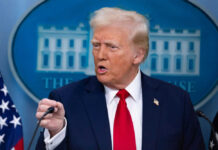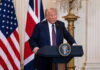

(RightWingJournal.com) – One unscheduled conversation between Donald Trump and Kim Jong-un could upend years of careful diplomacy, reset alliances, and send shockwaves through the world’s capitals, if it happens at all.
Story Snapshot
- Trump declares he is “100% open” to meeting Kim Jong-un during his Asia trip, fueling global speculation
- No official plans confirmed, but both leaders signal conditional willingness for direct talks
- Regional dynamics shifting as North Korea grows closer to Russia and China, increasing diplomatic complexity
- Experts divided on the likelihood and stakes of a surprise summit, with significant risks and potential rewards
Trump’s Asia Trip: A Diplomatic Wild Card
Donald Trump’s return to Asia has reignited the kind of electric uncertainty few leaders can conjure. He’s now traversing Malaysia, Japan, and South Korea, all while the possibility of an unscheduled, high-stakes meeting with North Korea’s Kim Jong-un hangs in the air. Trump’s statement, “100% open” to meeting Kim, wasn’t just a headline grabber; it was a flare shot over the bow of official diplomacy, reminding everyone of his unpredictable negotiating style and willingness to upend protocol. The White House insists no plans exist, but the world remembers the 2018 Singapore summit and the historic handshake at the DMZ in 2019. The question is no longer if Trump would meet Kim, but what it would mean if he did.
Kim Jong-un’s regime has been posturing and recalibrating, suspending civilian tours at Panmunjom and publicly signaling a fresh openness to talks, if the U.S. revises its stance on denuclearization. These subtle yet unmistakable moves have analysts dissecting every public statement and itinerary adjustment. North Korea’s recent tightening of ties with Russia and China has further complicated the diplomatic chessboard, raising the stakes for any direct engagement. Trump, for his part, sees opportunity in chaos. He has always preferred the personal touch, believing that one-on-one dialogue can accomplish what years of backchannel negotiations cannot.
The Players and Their Calculations
Both Trump and Kim have much to gain and possibly more to lose. For Trump, a surprise summit offers a chance to reclaim the diplomatic spotlight, reassert American influence in Asia, and perhaps even cement a legacy of unconventional peacemaking. Kim, meanwhile, stands to break out of diplomatic isolation, extract concessions, and reinforce his legitimacy at home and abroad. The motivations of secondary actors, regional leaders in Seoul, Tokyo, and Beijing, are far from aligned. South Korea and Japan anxiously watch for any sign that their security interests might get traded for a headline. China and Russia, now closer to Pyongyang than at any time in recent memory, see a Trump-Kim encounter as a possible lever to recalibrate their own influence over the peninsula.
National security teams on both sides are likely working overtime, gaming out every possible scenario, contingency, and risk. The balance of power is fragile, and the absence of official plans only heightens the sense of unpredictability. Trump’s negotiating style, as former advisors point out, is rooted in high-stakes surprise, a willingness to walk into the unknown and force others to react. For Kim, whose grip on power depends on projecting strength and extracting maximum advantage, the offer of direct talks is both a gamble and an opportunity. If either side miscalculates, the ripple effects would be felt far beyond Asia.
Regional Tensions and the Global Stage
Trump’s Asia trip comes amid an atmosphere of heightened tension and rapidly changing alliances. North Korea’s overtures toward Moscow and Beijing have given Kim new leverage and alternatives, making U.S. engagement less of a lifeline and more of a strategic option. The regional security architecture, already stressed by North Korea’s ongoing missile tests and China’s assertiveness in the South China Sea, could be profoundly altered by even the hint of a new U.S.-North Korea dialogue. American allies are left recalibrating their own positions, wary of being sidelined or surprised by sudden diplomatic shifts.
Experts caution that the outcome of a Trump-Kim summit, should it occur, would hinge on substantive American concessions, something unlikely without careful pre-negotiation. The skepticism is palpable: Trump’s flair for spectacle may not be enough to overcome the entrenched mistrust and divergent interests at play. Yet, as history has shown, surprise summits can change the course of events, sometimes for better, sometimes for worse. The mere possibility of a meeting exerts its own gravitational pull on the region, prompting both hope and anxiety in equal measure.
Copyright 2025, rightwingjournal.com