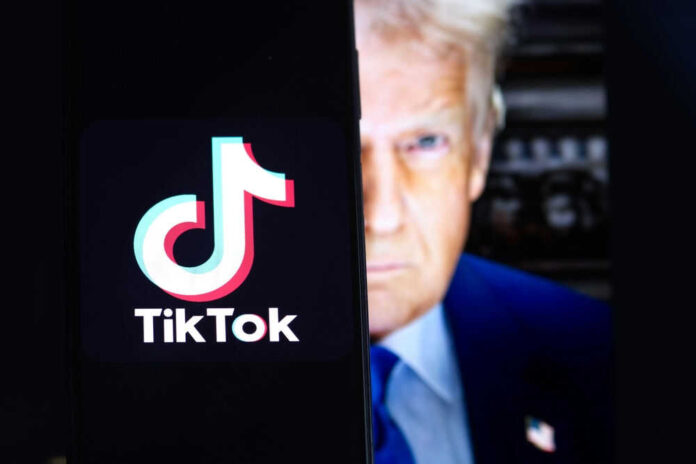
(RightWingJournal.com) – When national security concerns meet popular culture, the result can be a seismic shift in how international businesses operate, as seen in the U.S. takeover of TikTok.
Story Overview
- Trump approved a deal for U.S. control over TikTok, involving Oracle and Walmart.
- The move aimed to address national security concerns over Chinese data access.
- Legal and regulatory hurdles delayed the deal’s full implementation.
- The Biden administration continued scrutiny of TikTok, maintaining the focus on data security.
Trump’s Tactical Manoeuvre
In a landmark decision, Donald Trump approved a deal that transferred significant control of TikTok’s U.S. operations to American companies. The primary concern was to curb Chinese access to American user data and influence. This move saw Oracle and Walmart taking stakes in TikTok Global, the new entity managing U.S. operations. The decision, framed as a national security measure, marked the first major forced divestment of a Chinese tech company’s U.S. operations.
This deal set a precedent, pushing tech regulation and foreign investment scrutiny into the limelight. The involvement of high-profile U.S. companies like Oracle and Walmart highlighted the importance of safeguarding American interests. Yet, legal and regulatory challenges delayed implementation, leaving the future of this takeover shrouded in uncertainty.
Backdrop of Escalating Tensions
TikTok, owned by the Chinese company ByteDance, had grown into a cultural phenomenon with over 100 million U.S. users by 2020. This popularity raised alarms about data privacy and potential Chinese government influence. As U.S.-China tensions escalated, particularly over technology and trade, the Trump administration intensified its scrutiny of Chinese tech firms, including Huawei and TikTok.
Amidst these tensions, India had already banned TikTok, citing security concerns. The U.S. government’s actions were part of a broader strategy to limit Chinese influence in critical technology sectors. This context added layers of complexity to the TikTok takeover, intertwining tech sovereignty with geopolitical dynamics.
The Power Players and Their Motives
The key stakeholders in this saga included Donald Trump, ByteDance, Oracle, Walmart, and CFIUS (the Committee on Foreign Investment in the United States). Trump’s administration pushed the deal as a national security measure, aiming to leverage political and tech sovereignty. ByteDance, on the other hand, sought to retain ownership while avoiding a U.S. ban and protecting its global business interests.
Oracle and Walmart saw this as an opportunity to gain access to TikTok’s vast user base and data, which could significantly enhance their strategic expansion. Meanwhile, CFIUS played a crucial role in reviewing the foreign investments for security risks, acting as the enforcer of executive orders.
Ongoing Scrutiny and Legislative Actions
The original Oracle-Walmart deal never reached fruition due to legal and regulatory obstacles. However, the Biden administration continued to scrutinize TikTok’s U.S. operations, maintaining a focus on national security concerns. In 2024, bipartisan efforts in Congress renewed calls for a TikTok ban or forced divestment, reflecting the enduring apprehension over data privacy.
As TikTok remains operational in the U.S., it faces ongoing legal and legislative threats. In April 2024, the U.S. House passed a bill requiring ByteDance to divest TikTok or face a ban, while the Senate debated similar measures. The Oracle-Walmart deal may be dormant, but the precedent for forced divestment continues to influence legislative and regulatory actions.
Copyright 2025, rightwingjournal.com